Design Tips to Make Your Apartment Cozy For Fall
As the air begins to become crisp and leaves start to drop, people start to cozy up inside for Fall. With the days getting shorter, it would be nice to have a warm and festive place to come home to. It does not have to be time-consuming or complicated to create the perfect little fall corner. Whether it is simple lights or a new blanket on your couch, here are some simple ways to create your home the comfiest and most festive it has been yet.
Pumpkin it Up
Since pumpkins are the token plant of fall, try adding a few small pumpkins or gourds around the house. They can make for beautiful centerpieces on a dining table or a festive decoration on a coffee table. You can just set them on the table, put them in a wooden bowl, or in a glass vase. Another plus is that they last for a long time!
Add a Wreath
Wreaths are not just a decoration for the winter season now! You can buy one or you can DIY your own . You can use pinecones, sticks from outside, burlap, faux leaves, and anything else you think you would look good. String it with some ribbon and put it on your door, window, or shelf to add a touch of Fall design.
Break out the Blankets and Rugs
With the Fall bringing the chilly weather, more blankets and rugs are needed to keep your home warm. While a blanket has a technical purpose, a cozy knit blanket also is a beautiful touch when draped over a couch. You could also add one to the end of a bed, and on the porch to make sure the coziness travels all around the house. You can buy one or DIY a cable knit throw that does not require knitting. Rugs may not seem like they do much, but by adding mats to your bathroom and kitchen, they can keep your feet from getting cold!
Bring the Outside in
Although you may not be going outside as much, that does not mean you have to be a stranger to it. Bring some of the outside in by collecting small twigs and pinecones again. Paint some of them gold or silver for a dash of sparkle and put them in a glass container. You could also collect fall leaves, place them on a bulletin board or poster and cover it with a Mod Podge to have a beautiful wall decoration.
Lighting and Candles
Some of the best scents happen in the fall. Whether it is apple cinnamon or pumpkin spice, these scents can make your home smell great. If you are using a candle though, be sure to follow all safety precautions and never leave it unattended. Keep it away from any hanging cloth and always have a fire extinguisher nearby. A safer alternative may be to use a flameless, battery-operated candle . For lighting use lamps or add twinkly lights around any room (inside and outside). Getting rid of the harsh overhead light is a simple touch that will make your home feel as cozy as can be.
Typically apartments are priced by square footage, so figuring out what’s right for you will help your budget. Read on to pick the perfect apartment!
Figure Out What You Need Space For
One of the first things you’ll need to figure out is what you want to get out of your space. Ask yourself a few questions, like are you going to be living alone or with someone? Do you plan on living with someone else in the future?
If you’re going to be living by yourself and not have a lot of guests over, you should be okay with just one bedroom. An apartment of about 1,000 square feet or less is likely an ideal size to help you save money.
If you have pets, live with one or more people, or frequently have overnight guests, a two or three-bedroom apartment will be your best choice. Apartments about 1,100-1,200 square feet or more often provide enough space for multiple people. Consider that if you’re working from home a larger two or three-bedroom apartment is likely your best bet so one room can be designated as a workspace.
Lastly, how much stuff do you have? You're going to need room for a lot of it unless you want to rent a storage unit e ach month or declutter and reduce the number of items you have.
How to Measure Square Footage
It's important to know the square footage of your apartment because this will help give you an idea of how big of an apartment you'll need. A square foot is a square that measures twelve inches on each side. For reference, most of the tiles in your kitchen are probably about one square foot.
There are actually a few different ways to measure an apartment for square footage as well. Some of the measurements only account for how much livable space is in the apartment, like the living room, bedroom, and bathroom. If the square footage total includes non-livable space, this will include the storage, closets, and possibly garage. Ask your potential landlord or management company if they have calculations for both total and livable space so you can plan your storage solutions, furniture, and layouts accordingly before moving in.
Consider the Layout Too
While the square footage is important, you should also factor in the layout of the apartment. While a 1,200-square foot apartment might be okay for you, if the layout doesn't work, you may feel cramped. If you are going to get a one-bedroom or studio apartment, try and find one that has an open concept so it feels bigger. If you're going to be sharing an apartment, you might want to find a floor plan that is split, so that your bedrooms aren't right next to each other.
Map it Out
If you've seen the layout and the square footage, you can start mapping it out to see if it's the right size for you. You should start by measuring all your furniture and then writing down the measurements. Then, sketch out the dimensions of each room and start playing around with arranging your furniture in there.
Ask to Tour It
Tour the floorplan of the apartments you're most interested in. Although the exact apartment you’ll be renting may not be available to tour, you can often tour a model apartment or another vacant apartment of the same or similar layout. Most apartment communities showcase their floorplans online o r will offer to send you a digital version by email. This is a great tool to reference and compare various layouts.
Consider Your Budget
You're going to be paying for your entire apartment, so don't apply for a two-bedroom apartment if you're only going to use one of the bedrooms. The cost of your utilities will also depend in part on the size of your apartment. Be sure to consider what you can afford for utilities each month before committing to a larger apartment.
Learn More About How Much Space You Need for Your Apartment
We know that searching for apartments can be overwhelming and exhausting, but that's why we're here to help you. Our team of expert leasing consultants can help you find the perfect size apartment for your lifestyle.
If you're interested in touring or viewing our apartments, make sure that you contact us today to schedule an appointment !
Just got the keys to your first apartment? Congratulations! Now comes the hard part - paying your rent.
In all seriousness, the property management company wouldn't have accepted your application if they didn't think you were a good prospective tenant who could make the monthly payments. So, in theory, you shouldn't have anything to worry about. But, since you're new to the world of renting, there's a good chance you're in need of some budgeting tips to get you on the right path. After all, managing your money well enough to make sure you never miss a rent payment can take a lot more self-discipline than you might be used to.
Keep reading to find out some of our best apartment budgeting tricks for new renters.
1. Always Pay Your Rent First
Make this your golden rule and you're off to a good start. Your rent will likely be your biggest expense so it's wise to budget for this first. The best way to do that is to make a point of paying your rent as soon as you get your paycheck. While we wouldn't say that other bills aren't important, paying rent should be your top priority since it secures the roof over your head for another month. With that taken care of, meeting your other financial obligations should be a lot easier as you'll have a better idea of how much money you have to work with.
2. Transfer Your Rent Money to a Separate Account
Depending on when your payday is or how many you have per month, it's not always easy or even possible to sync up your paycheck and monthly rent payments. If this is the case, look into the possibility of opening up a separate account for paying bills. This practice is especially helpful if you get paid every week, every two weeks, or if you’re a freelancer or small business owner without a set payday. But it's also a good idea if you share the rent with someone else or you just need the extra discipline of a separate account. By setting aside the correct proportion of each paycheck to cover your monthly rent, paying rent on time will be a lot easier. And, while this account could be for rent payments only, you could use it to pay for all your recurring bills, from your internet provider to your insurance premiums.
3. Set Up Automatic Rent Payments
It's all well and good having a separate account for paying the rent and other expenses. But, if you have to remember to make transfers every month, it's easy to let bills slip through the cracks.
Setting up automatic payments is a convenient way to avoid ever missing a payment. It's also secure and can even help to improve your credit score. But, most important of all, you don't run the risk of incurring late fees and throwing off your budget as a result.
4. Check Your Past Outgoings
Before you set up your first apartment budget, it's a good idea to look back at your past outgoings. Seeing what you used to spend money on in black and white is a great way to get a handle on your future finances.
After all, before paying rent was a priority we bet you didn't think twice about getting coffee to go every morning or splashing out on designer sneakers. Now, while you might still be able to afford these extras, you're going to need to budget for them first.
Start by going back over old bank statements and credit card bills and try to think back to any cash payments you've made or make on a regular basis. Write all this spending down and categorize your spending into categories such as “entertainment,” “food,” or “personal care” and calculate the totals. With all your previous outgoings accounted for, learning how to budget should be a lot easier.
5. Make a Budget...and Stick to It
With a better idea of your finances, it's time to set your first apartment budget. To start, set aside an amount for your fixed expenses such as rent and utilities. You may be able to adjust some payments in the future, but for now, you need to budget for your current situation.
Next, you should look at working out how much you need to cover other expenses, such as food, transport, and clothes. For these kinds of ongoing expenses, it's often more helpful to set weekly budgets as you're unlikely to only buy gas or food once a month. Another bonus of setting weekly budgets is that you'll have to wait to buy anything more expensive, such as an item of clothing. Often, delaying the purchase can make you think twice about whether you really want it and save you money in the long run.
Using an online app such as Every Dollar or YNAB can help you visualize and track your budget and spending.
6. Find Ways to Save on Utilities
With a preliminary budget in place, you'll have a much better idea of how far your money will stretch each month. You might also find that some bills are more expensive than you'd anticipated. The good news is, while your monthly rent is a fixed amount, your other bills aren't set in stone. Take a look at the utilities and other fees you pay out every month and consider whether you could reduce these costs to best deflect the cost of your rent.
Some ways to keep your utility bills down include changing regular light bulbs for energy-efficient bulbs and adjusting the temperature setting on your thermostat by just a few degrees. You should also buy blinds for all your windows. These will help you block out heat during summer and trap heat in during winter, making it easier to cut down on AC and heating costs.
7. Cut Back on Unnecessary Expenses
Apartment budgeting doesn't have to mean the end of treating yourself to small luxuries. But it does mean being more mindful about your spending habits, as well as investigating possible cost-effective alternatives.
Start by considering how much value you get from certain subscriptions and memberships. Depending on the onsite amenities in your new apartment community, you may be able to cancel your gym subscription and use the apartment gym for free.
Likewise, you might have access to free onsite parking, extra storage space, or even entertainment facilities such as a billiards room or an outdoor dining area. With this in mind, you could rethink the way you socialize with friends, move your belongings out of storage, and maybe even save money on your car insurance if you were previously covered for overnight on-street parking.
And, even if your apartment doesn't have these amenities, there are ways to cut back. For example, instead of paying out for several streaming services, consider which you use the most and cancel the rest. Or, if you only go to the gym on weekends, find out if you can change your membership to a cheaper weekend-only membership.
8. Pay with Cash
One of the simplest yet effective budgeting tricks is to pay with cash. Yes, we know that only 41 percent of Americans carry cash on them these days and that paying by cash is seen as inconvenient. But the real issue here is that paying by card is too convenient.
Swiping a card doesn't give you the same emotional response that physically handing over cash creates. Small car payments are easy to lose track of. But, as you might have seen when you looked back at your old outgoings, a dollar here and a dollar there can soon add up.
The best way to stick to a budget is to take out a set amount each week to pay for everything and avoid using cards as much as possible. As well as making it easier to keep track of your outgoings, you can't spend what you don't have so it's much less likely you'll go over your budget!
9. Shop Around
When it comes to sticking to your budget and making the cash you have go further, shopping around can save you a lot of money. Your food bill is likely to be one of your biggest expenses after rent. But you can save money by collecting coupons, picking up in-store promo leaflets, downloading supermarket apps, and cherry-picking the best offers. Bulk buy non-perishable items like toilet paper, cleaning products, and toiletries, and take advantage of special offers on these items, as well as on canned and frozen foods.
You should also reassess how you buy fresh food and whether buying smaller packs could help you avoid waste. Or, better yet, start cooking in batches and freeze food. Having home-cooked meals ready to go saves you from having to cook every night, plus you'll be less inclined to blow your first apartment budget on takeout.
Don't be afraid to shop around when it comes to other expenses too. For example, instead of letting your insurances renew, ask if your company can reduce your premiums and find somewhere cheaper if not.
Budgeting Tips for Renters
As these helpful budgeting tips show, learning how to budget involves a lot of organization and prioritization. But first, you need to face your finances to ensure that paying rent on time every month won't be a problem.
Yes, can seem overwhelming when you see everything down on paper and have to make the numbers work. But knowledge is power, and knowing where your money goes each month as well as how to stretch it further makes apartment budgeting a lot easier.
For more information or to schedule a tour, feel free to contact us today!
Are you looking to freshen up your apartment but are struggling with ways to spruce it up? Add some color! There are a variety of ways you can add color to your space to create a fresh new dynamic. Even better, all of these methods are fairly affordable and don't require the labor that painting does. When it's time to move out, you can take these items with you to your next home. Read on to learn all about adding color to your apartment to truly make it your own!
Just Ask
If you want to paint the walls but aren't sure if you can, we recommend you just ask your landlord or apartment management. It's important that you already know what color you want to paint the walls and which walls you want to paint. If your landlord is reluctant, remember that you can also offer to repaint the walls when it's time for you to move out. Just be sure that you get the original paint color that they used.
Hang a Tapestry
If your landlord won't allow it or you really just don't want to paint, hang a tapestry! They come in all shapes, sizes, colors, and designs. Although many people think of bohemian designs when they heard the word "tapestry," they're able to match any aesthetic. For instance, Society6 is known for its independent artists that provide quirky, modern, and colorful art for tapestries.
Colorful Rugs
Although many people concern themselves with the color of the walls, the color of the floor is just as important. When you invest in a big and colorful rug, this can often inform the rest of the decor in your apartment. For instance, it may inspire you to purchase furniture that's just as colorful. You also have the option of taking a minimalist approach so that the room doesn't feel too chaotic. If you already purchased a lot of furniture and decor before purchasing a rug, focus on finding a rug that has similar colors as the rest of your decor.
Colorful Furniture
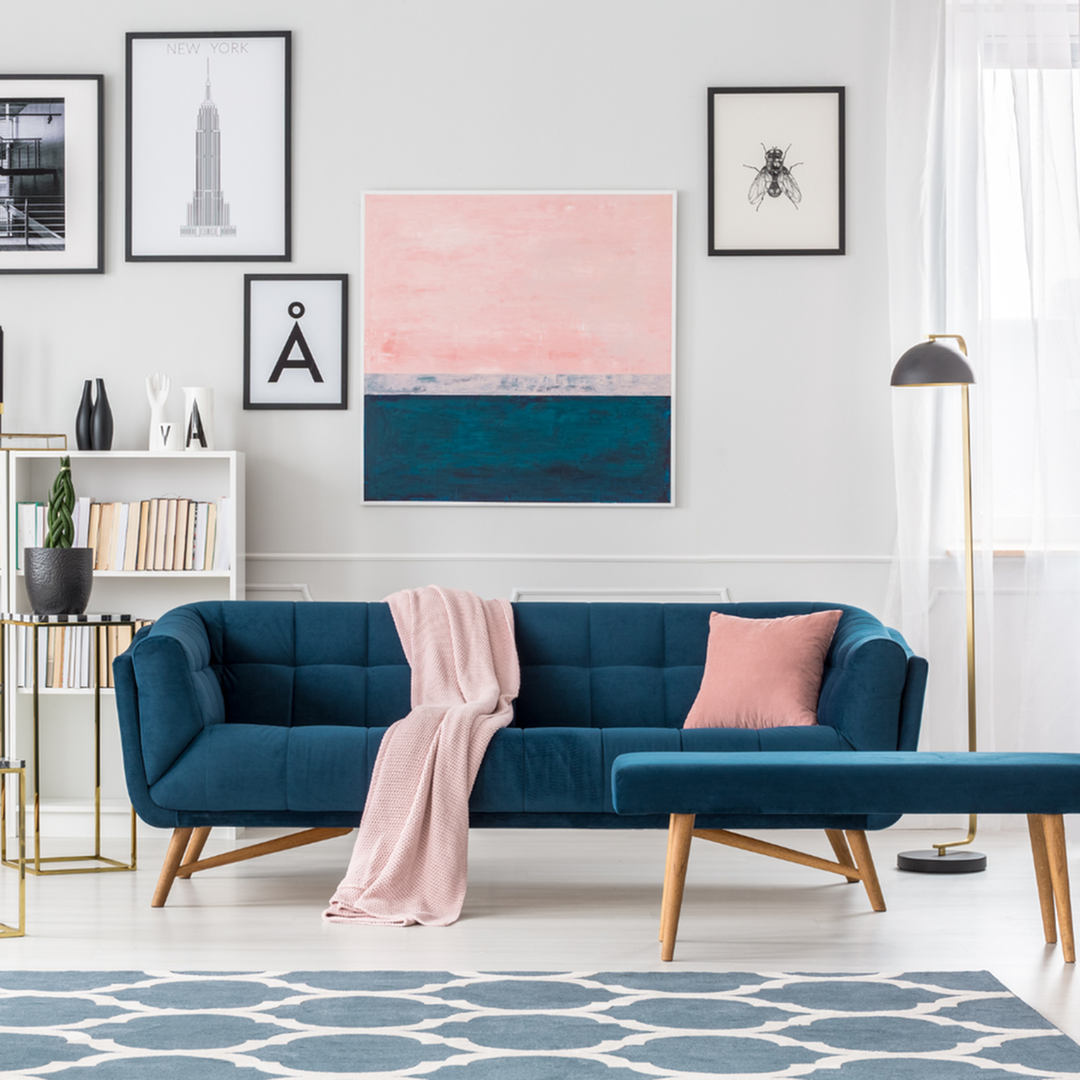
When you look in your living room, the largest piece of furniture in the space is probably your couch. Your armchairs are probably next. With this in mind, if you want a way to add instant color and a modern touch to your space, purchase a couch with a bold color. Couches are often different shades of tan, gray, and black. Break the mold and go for a dark green, dark blue, or even a pink or red. You'll immediately have a fun and funky focal piece. A few neutral accent pillows can help balance the intensity.
Create a Gallery Wall
If there's a large, blank wall in your apartment that you have no idea what to do with, consider creating a gallery wall ! With color and theme in mind, purchase frames of different sizes first and take their measurements. Then, cut out pieces of paper that are the size of your frames and stick them to your wall to see the arrangement you like the best. Once you find an arrangement that works, take a photo! You'll reference it as you source artwork and begin hanging each piece. When you're finished, you'll have an eclectic and fun wall that contains photos, paintings, graphics, and quotes that speak to you.
Fill It With Plants
If you're one of the lucky people that has a lot of natural light in their apartment, you need to take advantage and purchase a few plants. Not only can plants clean the air and create a vibrant, living element to your home, but their rich green colors can quickly change the look of your apartment. We recommend starting with hardy tropical plants that thrive in low-light conditions, such as:
Pothos
Spider plants
Snake plants
ZZ plants
Lucky bamboo
Peace lily
Keep your plants as close to your windows as you can and only water them when you feel the soil is dry.
Wall Decals
Apartment decorating can be as simple as sticking something to a wall. Removable wall decals are a great option if you hate hanging things and want a no-fuss option. You can find them online as well as in popular big box stores. Even better, they come in a variety of patterns, shapes, and colors so that they can fit almost any aesthetic. The trickiest part is to install them without making bubbles, so we recommend enlisting the help of a friend or going at a slow and steady pace. If you do get air bubbles, sometimes a hairdryer will help, but it's important to read the manufacturer's recommendations.
If you want to cover large, blank walls, you also have the option of peel-and-stick wallpaper.
Color Pop Decor
Remember that home decor can help you more than you think–you just have to shop with intention. Choose decor items that have the accent color you want in your space. If you find a sculpture, pot, or frame that doesn't have the color you're looking for, you also have the option of spray painting it. Place these decor items strategically around your apartment in order to give pops of color wherever you look. This can be throw pillows on the couch, small sculptures on a shelf above the television, and even the spines of books on your bookshelf .
A Touch of Color Can Do Wonders for Your Apartment
Apartment living doesn't have to be a drab and uncomfortable experience. You can personalize your space with the color you love through these non-invasive methods. The best part is that when it's time to move, you can take all of these items with you. Instead of having to go through the labor of painting only to move and never see them again, tapestries, wall art, and furniture are an investment.
Ready for your next apartment or townhome in Eldersburg, MD? Contact Piney Ridge today!
Moving can be a stressful process. You have to plan and keep track of so many things at one time. However, one thing you should not have to stress about is your moving company. Knowing the questions to ask before you commit is the best way to avoid any unwanted surprises on moving day. Here are some ways to choose the perfect moving company for you.
Referrals
Before you start searching the web for your moving company, ask your family and friends if they have any recommendations. You can also ask your real estate agent if you are working with one. The internet should be your second or third option as some reviews about moving companies may not be totally reliable. The Better Business Bureau is a helpful website to use should you turn to the internet.
Don’t Choose the First One
Do not go with the first moving company that you meet with. Meet and get in-person estimates from at least three companies before you start to narrow it down . Ask them questions , such as how they determine the cost of the move and how long the company has been in business.
Check Verification and Licensing
For a moving company to be verified, the U.S. Department of Transportation Federal Motor Carrier Safety Administration must have a U.S. DOT number license. This license is given to interstate movers. You can verify a company’s license by going to protectyourmove.gov and requesting the company’s DOT number.
Check Insurance Coverage
While a moving company is required to be licensed, they also are required to have a minimum amount of insurance. This insurance can vary from company to company, but it also should be included in the questions you ask them. They must provide you with written proof called a Certificate of Insurance. To confirm a moving company’s insurance, you can search them on SAFER or call the insurance company itself.
Confirm Everything
Before signing any contract or binding yourself to a moving company, confirm that everything that they have said has been put in writing. Give the contract a thorough read, check their license and insurance, and confirm payment terms as well. By double- and triple-checking these criteria, it will cause less stress and fewer issues on the big day.
With these quick and simple tips, your move will be quick, safe, easy, and cheap. The best way to get a good start somewhere new is to get there the best way possible.
As temperatures start to decrease outside and people begin to start staying in more, it is important to take precautions so that your apartment is a safe place to be. Most apartment fire s are preventable if safety measures are put in place, but it is also important to have a plan if a fire does happen. Whether it is a kitchen fire or electrical fire, here are some fire prevention tips to ensure that your family is safe through the chilly months.
Kitchen Safety
As the colder weather comes, the want for a warm, hearty homecooked meal comes as well. All the cooking and baking that takes place makes a home feel lively, but as almost half of the apartment fires start in the kitchen it is important to be mindful of how you go about it. Do not ever leave food unattended and keep oven mitts and towels away from any hot surface. Be especially careful when using oil or grease and try to avoid wearing loose-fitting clothing. Setting a reminder to turn off the oven or stove just to be extra careful!
Smoke Detectors and Fire Extinguishers
Ensuring that your apartment has working smoke detectors is an easy, quick precaution to take to protect yourself. These detectors can be battery-powered or electrically wired. Test alarms about once a month and put one outside each room where people sleep. If a smoke detector is malfunctioning, try to take care of that ASAP. Fire extinguishers are also an easy precaution to take in your home. Having a fire extinguisher on hand can help prevent a small fire from spreading into a bigger one. Make sure the extinguisher is up to date and working properly.
Heating and Candles
When using a portable space heater , make that there are at least three feet of clearance around it. Do not keep them on all day and especially do not leave them on when you go to sleep. Turn them on in intervals and when they are on keep small children and pets away from them. When it comes to candles , never leave the open flame unattended and keep it away from curtains or any type of draping cloth. Always remember to blow candles out if you are leaving the room or if you are going to sleep.
Electrical and Appliances
In order to prevent electrical fires , try to use power strips instead of extension cords because they have circuit breakers. If any type of electrical appliance cord gets cut or cracks, do not try and tape it back together with electrical tape as this can make the cord to overheat and cause a fire. Unplug the cord and replace it instead. You can also protect your appliances by using surge protectors. If an electrical fire does occur, do not ever throw water on it because of the risk of electrocution; a fire extinguisher is always better.
Laundry Room
To ensure property safety measures in your laundry room, have your dryer installed by a professional. Avoid using dryers that do not have a lint filter and clean your lint filter after every load.
Have a Plan
Although following all these tips can reduce the chance of a fire occurring in your apartment, not all fires can be prevented. That is why it is important to have an escape plan . Conduct practice fire drills with your family and map out the best route to get out of your building. Have a backup route just in case the first route is blocked. Being prepared if a fire does occur can help reduce panic in a real situation.